
Can You Sleep With Contacts In?
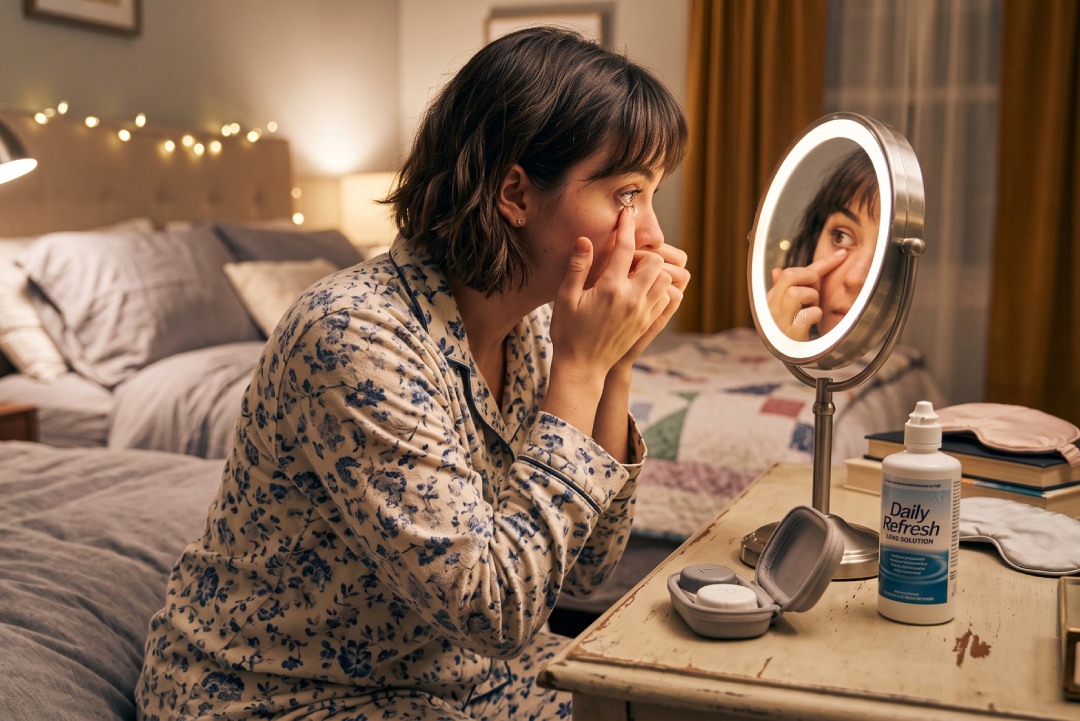
Almost every contact lens wearer has wondered whether it’s okay to fall asleep with their lenses still in. Whether it’s a quick afternoon nap or a full night’s sleep, wearing contacts while you sleep can affect your eye health in ways many people don’t realize. Here’s what happens and how to protect your vision.
You’re watching television after a long day or reading a book before bed. The next thing you know, you wake up with dry, scratchy eyes and realize you never removed your contact lenses.
If this has happened to you, you’re certainly not alone. One of the most common questions eye doctors hear is, “Can you sleep with contacts in?”
The short answer is that most contact lenses are designed to be removed before sleeping. While an occasional accidental nap usually doesn’t cause lasting harm, regularly sleeping in your contacts can increase your risk of serious eye problems.
At Li & Liao Optometry, we want every contact lens wearer to understand how to keep their eyes healthy and comfortable.
What Happens If You Sleep With Contacts?
During the day, oxygen reaches your cornea directly from the air. Contact lenses naturally reduce the amount of oxygen that reaches the surface of your eye, even while you’re awake.
When you close your eyes to sleep, oxygen levels drop even further. If you’re also wearing contact lenses, your cornea receives even less oxygen, a condition known as corneal hypoxia.
Over time, reduced oxygen can weaken the surface of the eye and make it easier for bacteria to enter.
Risks of Sleeping in Your Contacts
Sleeping in your contacts significantly increases the risk of eye complications.
These include:
- Dry, irritated eyes
- Redness and discomfort
- Blurred vision
- Corneal scratches
- Corneal ulcers
- Serious eye infections
- Increased risk of permanent vision loss in severe cases
Although severe infections are uncommon, they can develop quickly and may require urgent medical treatment.
The longer contact lenses remain on the eye, the greater the risk becomes.
Can You Nap With Contacts?
While a brief nap generally carries less risk than wearing contacts overnight, eye doctors still recommend removing your lenses whenever you plan to sleep.
Even a 20- or 30-minute nap reduces oxygen reaching the eye and may leave your contacts feeling dry or uncomfortable when you wake up.
If you’re wondering, “Can I take a nap with contacts?” the safest answer is still no. Removing them first only takes a moment and can help prevent unnecessary irritation.
What If You Accidentally Fall Asleep?
Don’t panic.
If you accidentally doze off while wearing your contact lenses, avoid pulling them out immediately after waking.
rily stuck to the surface of your eye.
Instead:
- Blink several times
- Use preservative-free lubricating eye drops or rewetting drops
- Wait several minutes for the lenses to rehydrate
- Remove the lenses gently once they move comfortably
If your eyes remain painful, red, sensitive to light, or your vision stays blurry after removing the lenses, contact your eye doctor promptly for an evaluation.
Are There Contacts That You Can Sleep In?
These lenses are made from highly breathable silicone hydrogel materials that allow more oxygen to reach the cornea while you sleep. Even so, overnight wear is only recommended under the guidance of an eye doctor.
Not everyone is a good candidate for extended-wear contact lenses. Your eye health, prescription, tear quality, and lifestyle all play a role in determining whether they’re a safe option for you.
How Long Can You Sleep With Contact Lenses?
If you accidentally fall asleep for a short period, remove your lenses carefully once your eyes have rehydrated. Avoid making overnight wear a habit, as the risk of complications increases each time you sleep in lenses that aren’t designed for extended wear.
If you’re interested in contacts that you can sleep in, schedule an eye exam before trying overnight wear. Your optometrist can recommend lenses that are appropriate for your eyes and explain how to wear them safely.
When Should You Call Your Eye Doctor?
Sometimes discomfort after sleeping in your contacts goes away within a few hours. Other symptoms should never be ignored.
Contact your eye doctor if you experience:
- Persistent eye pain
- Redness that doesn’t improve
- Light sensitivity
- Blurred vision that continues after removing your lenses
- Excessive tearing or discharge
- A feeling that something is still stuck in your eye
These symptoms may indicate an infection or a scratch on the surface of the eye and should be evaluated as soon as possible.
Healthy Contact Lens Habits Protect Your Vision
Simple habits like washing your hands before handling lenses, replacing them on schedule, cleaning reusable lenses correctly, and removing them before bed can greatly reduce your risk of complications.
If you frequently fall asleep wearing your contacts or would like to learn whether extended-wear lenses are right for you, an eye exam is the best place to start.
Contact Lens Exams in Bakersfield
Whether you’re new to contact lenses or have worn them for years, regular contact lens exams help keep your eyes healthy and your vision clear.
At Li & Liao Optometry, we provide comprehensive contact lens evaluations, personalized lens fittings, and expert guidance to help Bakersfield patients wear their contacts comfortably and safely.